A steering wheel cover has one job that matters above all others: to sit under your hands for years without slipping, cooking in the sun, or wearing through at the ten-and-two positions. The material you choose decides all three, and it also decides whether the cover can carry a custom print at all. Before you settle on a look, it pays to work through size, grip, heat and durability in that order, because the right material for a rideshare driver in a desert city is not the right material for a fleet manager buying five hundred branded covers.
Start With Size, Then Material
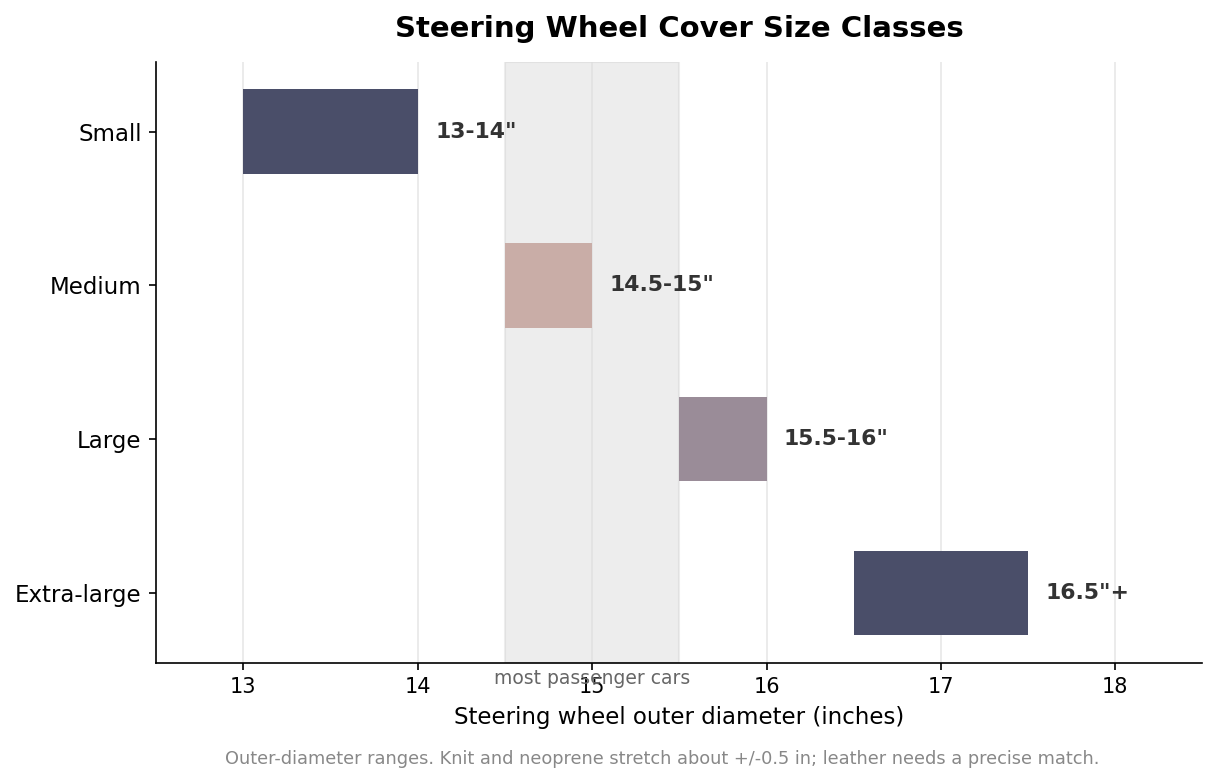
Fit comes before finish. Steering wheel covers are sold by the wheel’s outer diameter, and the common classes run from small at 13 to 14 inches, through medium at 14.5 to 15 inches, to large at 15.5 to 16 inches and extra-large from 16.5 inches up. Most passenger cars land in the 14.5 to 15.5 inch band, while trucks, older vehicles and some sports cars sit outside it. Material interacts with fit here: knit and neoprene covers stretch roughly half an inch in either direction and forgive a near-miss, whereas a leather or leather-look cover is cut to a precise circumference and has to match the wheel closely or it will never seat cleanly. Measure the outer diameter of the actual wheel, not the grip thickness, and buy to that number.
Grip Is the Whole Point
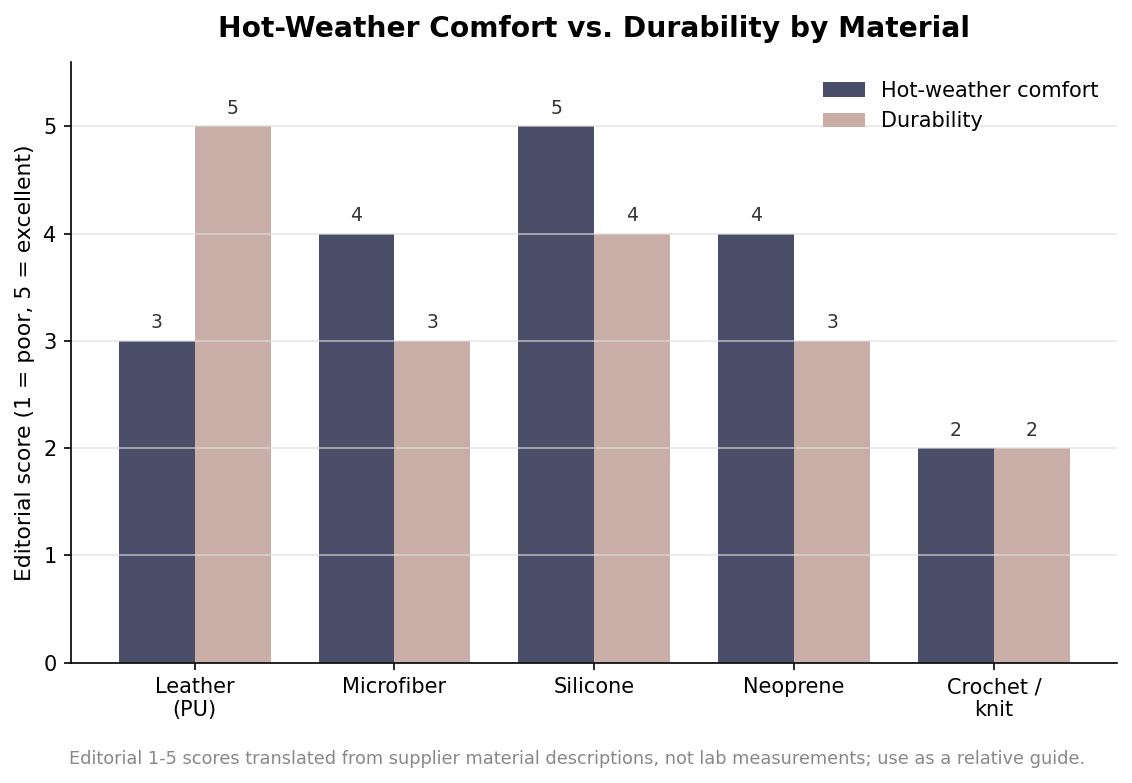
Everything else is secondary to how the cover feels when you turn it. Silicone leads on raw anti-slip grip and stays planted even with damp hands, which is why it shows up so often on sporty and utility builds. Leather and quality PU deliver an excellent, familiar grip that many drivers prefer for its firmness and its look, and microfiber sits just behind with a very good, slightly softer hold. Padding is a related lever: a thicker cover is more comfortable over long shifts but mutes the feedback the wheel sends back to your hands, so drivers who value road feel tend to choose a thinner profile. Grip is personal, so if you can, hold a sample before committing to a large order. Grip thickness is itself a spec: covers are commonly offered in a standard profile and a thicker, cushioned profile, and moving up a step effectively adds a few millimeters to the wheel’s felt diameter, which is another reason to confirm fit and feel together rather than in isolation.
Heat Is the Deciding Factor in Hot Climates
In a hot market, heat management outranks nearly everything. A dark cover on a wheel left in direct sun can become genuinely uncomfortable to hold, and materials differ sharply in how they behave. Silicone and microfiber tend to stay the most manageable in high heat, neoprene brings real insulating value and shrugs off moisture, and genuine or synthetic leather, for all its appeal, can overheat in direct sunlight and takes time to cool. Crochet and plush or faux-fur styles are the wrong call for hot climates: the first absorbs moisture and the second is built for winter warmth. If your buyers are in the Sun Belt, weight the selection toward silicone, microfiber or neoprene and treat leather as a park-in-the-shade choice.
Durability and Where Custom Printing Fits
Durability and printability often point to the same materials. Leather and good PU are the most hard-wearing over years of daily use, while microfiber trades some of that longevity for comfort and can wear faster under heavy hands. Neoprene and knit are comfortable and stretchy but can loosen over time as the fibers relax. For a custom-printed or branded cover, the practical substrates are the printable synthetics: polyester and neoprene take dye-sublimation graphics well, and PU can carry printed or embossed branding, whereas full-grain leather is a poor canvas for photographic artwork. If the whole point of the order is a logo, a full-wrap design or fleet colors, you are almost always choosing among printable synthetics first, then optimizing grip and heat within that set. Care differs by material as well: silicone and PU wipe clean with a damp cloth, microfiber and neoprene may need occasional gentle washing, and knit or crochet covers are the fussiest to keep looking new. For a cover that will be handled every day, easy cleaning is a quiet but real part of how long it stays presentable.
Matching Material to the Job
Put the pieces together by use case. A daily driver or rideshare vehicle in a temperate climate is well served by microfiber for its balance of comfort, grip and price. A car that lives in extreme heat leans toward silicone or neoprene. A fleet buying in volume for branding usually wants a printable polyester or neoprene that holds color and survives shift work, sized generously because a mixed fleet spans several wheel diameters. A promotional giveaway can accept a lighter knit or printed polyester, where the graphic matters more than a decade of wear. And a truck or vintage vehicle needs to confirm the large or extra-large class before anything else. Decide the use first and the material list narrows itself.
There is no single best steering wheel cover material, only the best one for a given wheel, climate and purpose. Size the wheel, settle on the grip and heat performance your drivers need, confirm the material can carry the print you want, and the choice usually makes itself. Get those four in order and the cover will still feel right under your hands long after the novelty of a fresh design has worn off.